If you’ve been to Jenkies more than once, you’ve probably had our Signature Blend. It’s the one people come back for. It’s also the one people ask about most — "what’s in it," "what makes it different," "why does it taste better than the stuff I make at home." This is a friendly guide, no coffee-nerd vocabulary required (well, maybe a little).
What "Blend" Means
A single-origin coffee comes from one specific place — one farm, or one region. A blend is a mix of two or more coffees. The blender’s job is to combine them so the strengths of each highlight the strengths of the others.
A good blend does three things:
- Delivers a consistent flavor year-round (single-origins change wildly with the harvest).
- Balances qualities that single origins rarely have all at once (brightness + body + sweetness).
- Handles many brew methods without falling apart.
The Signature Blend is what happens when you ask three different coffees to be friends.
What’s In Ours
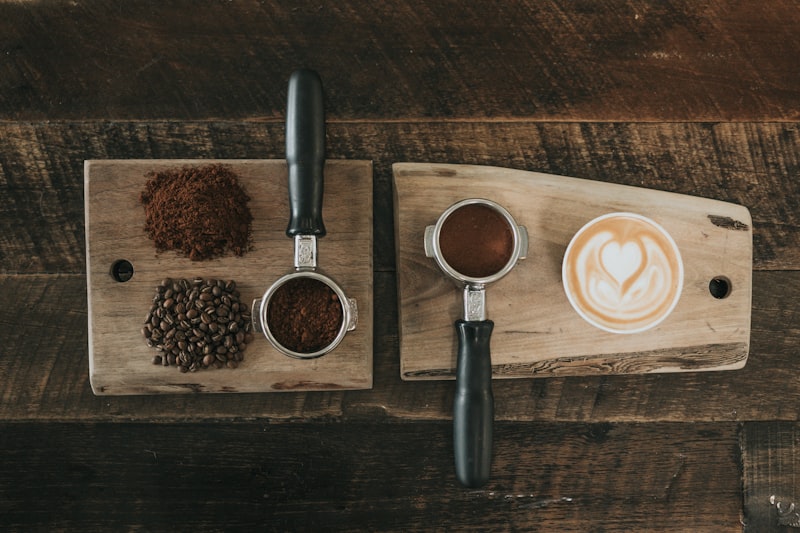
Our Signature Blend has three components, blended after roasting (never before):
60% Colombian Huila (washed)
This is the base. Colombian coffee from the Huila region is known for balance — moderate acidity, medium body, chocolate and caramel notes. It’s the reliable middle of the cup. Every cup builds on this bean.
30% Ethiopian Yirgacheffe (natural process)
This is where the brightness comes from. Natural-process Ethiopian coffees have a fruity, floral quality — think blueberry, jasmine, sometimes a little strawberry. It’s what makes the cup sing.
10% Sumatra Mandheling (wet-hulled)
This is the anchor. Sumatran coffees are earthy, heavy-bodied, with notes of cedar and dark chocolate. Ten percent isn’t much, but it’s the deepest note in the cup — the low end that makes the high end sound right.
What To Taste For
If you’ve never actively tasted coffee (as opposed to drinking it while checking email), here’s a very short guide.
Take a sip. Let it sit on your tongue for a second before swallowing. Notice three things:
1. Acidity (a.k.a. brightness)
Not sourness — a good acidity is like the tang of a green apple or the sparkle of a lemon. In our blend, look for it as the first thing that shows up on your palate. That’s the Ethiopian doing its job.
2. Body (a.k.a. weight)
How does the coffee feel in your mouth? Light like water, medium like whole milk, or heavy like cream? Our blend is medium-bodied — not thin, not syrupy. That’s the Colombian.
3. Finish (a.k.a. aftertaste)
What lingers after you swallow? A dark chocolate note? A hint of caramel? A slight nuttiness? Ours finishes with cocoa and a whisper of walnut. That’s the Sumatran anchor.
How To Brew It At Home
Every brew method has quirks, but the fundamentals hold. Here’s a beginner-friendly approach.
If you have a drip coffeemaker
- Use freshly ground beans. If your grind comes from us, we can grind to your machine.
- Use filtered water. Even a Brita pitcher’s water improves the cup meaningfully.
- Measure. 60 grams of coffee per liter of water is the international standard. In practice: 2 heaping tablespoons per 8-oz cup.
- Preheat your carafe by running water through it first. A cold carafe drops your brew temp.
If you have a French press
- Grind coarse (like sea salt).
- Use a 1:15 ratio. 30g coffee to 450g water for a two-cup press.
- Pour off-boil water (about 200°F — count 30 seconds off the boil).
- Steep for 4 minutes.
- Press slowly and pour immediately. Never let it sit pressed.
If you have a pour-over
- Grind medium-fine (like table salt).
- Rinse the filter with hot water first — this preheats the dripper and removes any paper taste.
- Use a 1:16 ratio. 25g coffee for a 400g brew.
- Bloom: pour 50g water, wait 30 seconds.
- Pour the rest in slow concentric circles over 2 minutes.
- Total brew time should be about 3–4 minutes.
Storing Your Beans
Coffee is a fresh product. Treat it like fresh bread:
- Keep beans in an airtight container at room temperature. Not in the fridge. Not in the freezer.
- Use within three weeks of the roast date. After that, you’re drinking last month’s bread.
- Grind just before brewing. Pre-ground coffee loses aromatics within minutes of grinding.
What Makes The Café Version Different (Honest Answer)
Even with our beans, our recipes, and your best home effort, the version at 368 Pine Street will usually taste better. Not because we’re hiding anything. Because:
- Grind consistency. A commercial grinder produces more uniform particles than any home grinder under $500.
- Water temperature control. Our brewers hold water at exactly 199–201°F. Most home machines cycle wildly.
- Freshness at scale. A single bag of ours at home lasts you a week. A single bag here lasts us three hours.
- Ambiance. This is unquantifiable but real. Coffee tastes better in a warm room with a mural.
We say this not to discourage you from brewing at home — please brew at home! It’s a great daily ritual — but to answer honestly why the café cup hits different. The delta is real. It’s also small enough that a good home brewer can close 70% of it. And then you have a Sunday morning ritual you own.
The Case For Whole Bean
Pre-ground coffee is fine. If you buy it, we get why. But if you can swing a $50–$80 burr grinder, it’ll pay for itself in flavor within a month.
A burr grinder crushes beans between two ridged plates, producing uniform particles. A blade grinder (the cheap kind) chops beans irregularly — some too fine, some too coarse — which brews unevenly. If your home coffee tastes slightly bitter and slightly weak at the same time, this is almost always the reason.
Come See The Machine
If you’ve read this far, you’re a coffee person. Come by any Tuesday afternoon (2–4 p.m. after the rush) and ask for Amanda. She’ll show you the roaster, walk you through our current beans, and probably send you home with a sample of whatever single-origin we’re dialing in.
Coffee is one of those things that improves the more attention you give it. We’re happy to be your accomplices.